

On a GLP-1 Medication? Here's Why Protein Matters More Now, And How SURGE Can Help
If you're on a GLP-1 medication, here's the short version: appetite suppression can make it hard to hit your protein needs, and low protein intake is a major reason people on these medications lose muscle along with fat. This isn't medical advice: talk to your prescribing doctor about your specific plan, but here's what the research says about protein and muscle preservation.
Why Muscle Loss Happens on GLP-1s
In body composition studies, people on these medications have lost a meaningful share of lean mass alongside fat mass over the course of treatment. The mechanism is straightforward: these medications work by reducing appetite, so people naturally eat less overall, including less protein. When protein intake drops too low, the body starts breaking down muscle tissue for energy instead of preserving it.
How Much Protein Actually Helps
Research and clinical guidance converge on a consistent range for people managing this: roughly 1.2–1.6 grams of protein per kilogram of body weight per day, spread across meals, with a rough target of 25–40 grams of protein per meal where possible. That's a meaningfully higher target than what most people naturally land on when appetite is suppressed.
The Real Challenge: Getting There With a Smaller Appetite
Hitting a protein target is a different problem when you physically don't want to eat much. A big meal with a chicken breast or a thick protein shake can feel like too much when your appetite is already reduced. This is where format matters: something you can actually get down easily, without it feeling like another meal you have to push through, makes a real difference in whether you hit your number on a given day.
Where a Lighter Protein Format Fits In
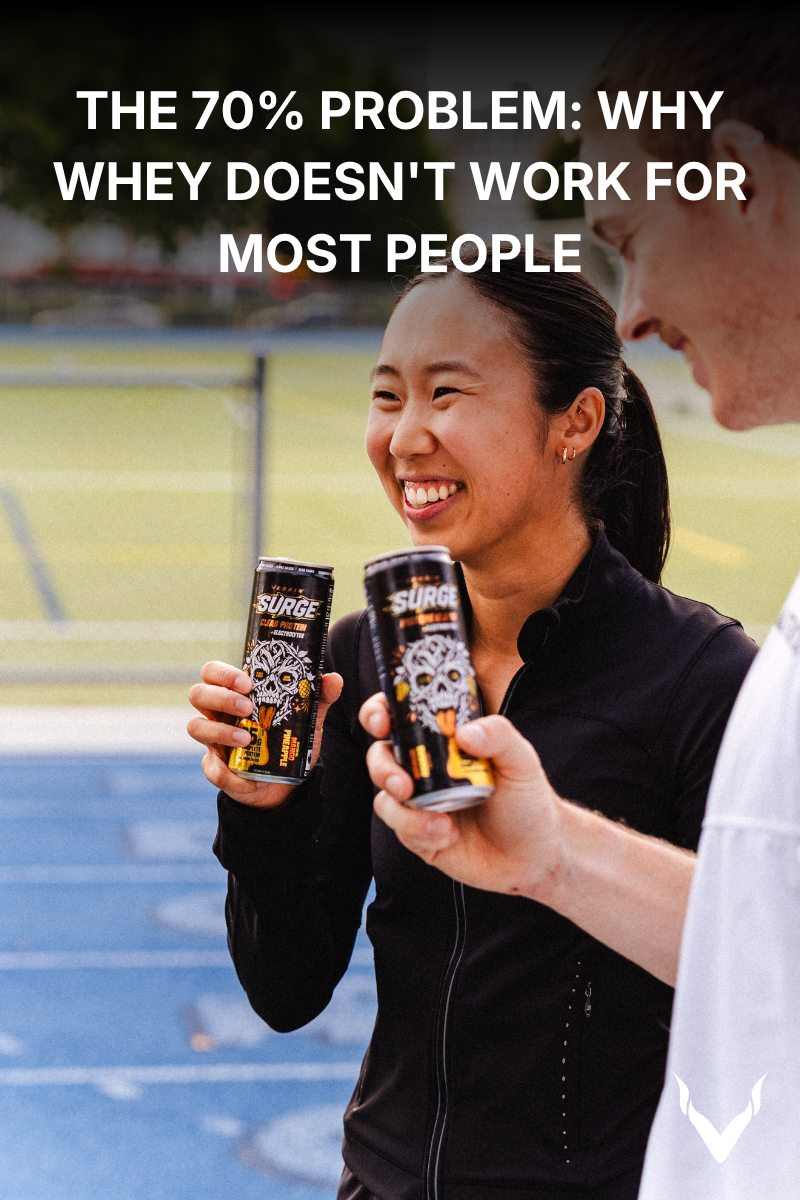
This is exactly the gap that SURGE is built for. At 25g of complete plant protein per full serving, it delivers close to the lower end of a single meal's protein target in something that drinks like a juice, not a meal you have to work through. It's not a substitute for medical guidance, but it's a practical way to close the gap between what you need and what you can actually get down on a given day.
Resistance training 2-3 times per week is also part of the guidance clinicians point to for preserving muscle during this kind of weight loss, protein intake and training work together here, not one instead of the other.
The Bottom Line
Weight loss and muscle loss aren't the same thing, and on a GLP-1 medication, protecting the second one takes deliberate effort on protein intake specifically. If appetite suppression is making that hard, a lighter, easier-to-finish protein format can help, alongside guidance from whoever's managing your treatment.
A protein that's actually easy to finish. Shop SURGE →




Leave a comment
This site is protected by hCaptcha and the hCaptcha Privacy Policy and Terms of Service apply.