
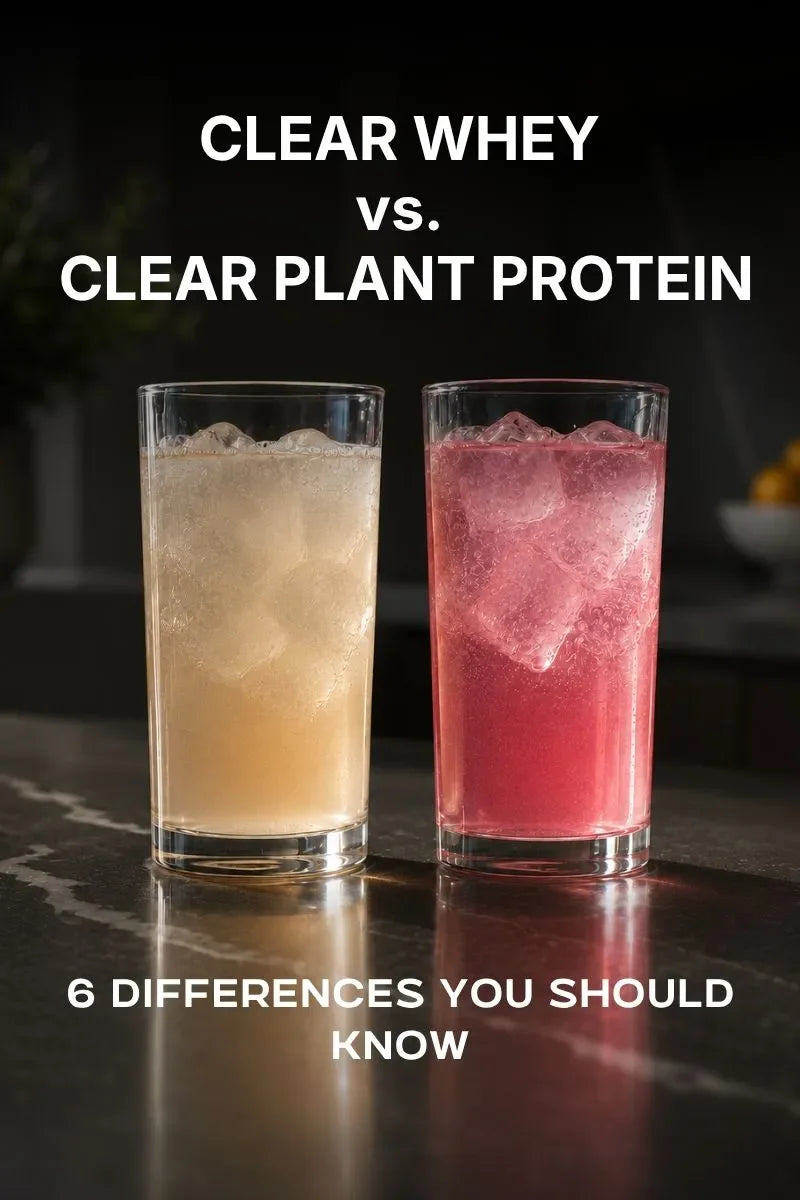
Clear Whey vs. Clear Plant Protein: 6 Differences You Should Know
If you've ever grabbed a clear, juice-like protein drink off a shelf, there's a good chance it was whey-based, not plant-based. That's not an accident. Clear whey has had roughly a decade's head start, and it's still the version most people run into first. Clear plant-based protein exists, but it's a lot rarer, and there's a real, technical reason why.
Here's what actually separates the two, and why we went through the harder version to create SURGE anyway.
1. Clear whey got here first, but plant-based is catching up for a reason
The clear protein format isn't new, even though it feels like it's blowing up right now — it's been showing up in sports nutrition beverages for nearly a decade. That head start matters: the processing techniques, flavour-masking methods, and manufacturing know-how for clear whey are well established. Clear plant-based protein is playing catch-up on a format whey has had years to refine.
But "newer" cuts both ways. Clear plant-based protein isn't catching up on outdated ground, it's being formulated for today: today's ingredient science, today's understanding of digestion and absorption, and today's demand for something dairy-free. Whey got the head start on the format. Plant-based gets the benefit of everything learned since.
2. Whey turns clear more easily — that's just its chemistry (but breaking down pea protein pays off too)
This part comes down to basic protein science, not effort. The main protein in whey isolate (beta-lactoglobulin) is naturally highly soluble across a wide pH range and forms a clear solution on its own, even at neutral pH. Raw plant protein doesn't have that same built-in solubility, which is exactly why it needs an extra processing step to get there. Whey basically starts the race a few steps ahead.
Here's the upside, though: getting pea protein to that point means hydrolyzing it (breaking it down into smaller peptide chains) and that extra step pays off. Your body absorbs those shorter peptide chains more rapidly, since there's no need to break down a whole, intact protein first. So the same hydrolysis process that helps plant protein catch up on clarity is also what makes it quicker for your body to actually use.
3. Making plant protein clear is genuinely harder (and pricier)
To get a plant protein to go clear, it has to be hydrolyzed (broken into smaller peptides) which helps solve the clarity problem but introduces a new one: bitterness. Hydrolyzed proteins are prone to a bitter taste from the process itself, and plant proteins already come with their own earthy undertones on top of that. Solving both problems at once (clarity and taste) requires more R&D than clear whey requires, which is a big part of why it costs more to produce and why so few brands have bothered.
4. Plant-based solves a problem whey can't
Here's the trade-off: whey may be easier to clear up, but it's still dairy. Roughly 70% of people have some degree of lactose intolerance, and no amount of clever processing changes that a whey protein is derived from milk. Clear plant-based protein (done right) sidesteps that problem entirely, while still delivering a complete amino acid profile if the formulation is built properly.
5. The difference that actually matters to you
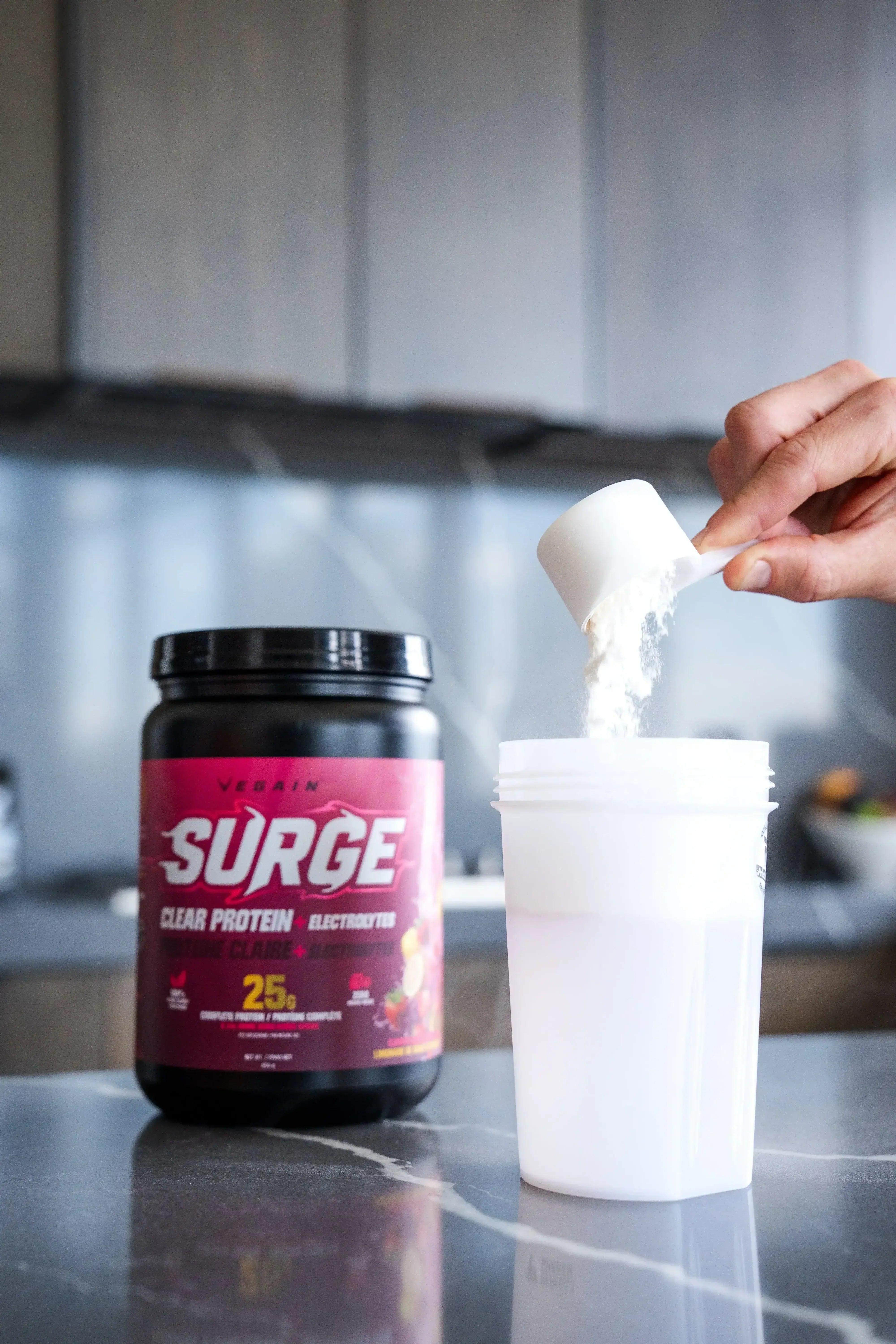
This is where it comes down to more than a science lesson. SURGE™ is VEGAIN's answer to the "clear protein has to be dairy" problem: hydrolyzed Canadian pea protein delivering 25g of complete plant protein per full serving, at 84% protein density, with all 9 essential amino acids and 24g of BCAAs and EAAs — zero sugar, dairy-free, and third-party tested on every batch. You get the crystal-clear, light-drinking format people already love about clear whey, minus the dairy, minus the lactose issue, and without giving up real protein numbers to get there.
6. Electrolytes built right in
Here's something clear whey typically doesn't bring to the table: SURGE is formulated with added electrolytes, not just protein. That's a meaningful difference if you're drinking it around a workout, you're replacing what training takes out of you at the same time you're feeding your muscles, instead of needing a separate hydration drink on top of your protein. Protein and hydration, same glass.

The Bottom Line
Clear whey exists because whey's chemistry makes it the easy path. Clear plant-based protein exists because someone decided the harder, pricier path was worth it for the people dairy leaves out. That's the whole reason SURGE was built, and it's why it was named North America's first clear, plant-based protein beverage.
CTA: Try the clear protein that didn't take the easy way out.




Leave a comment
This site is protected by hCaptcha and the hCaptcha Privacy Policy and Terms of Service apply.