
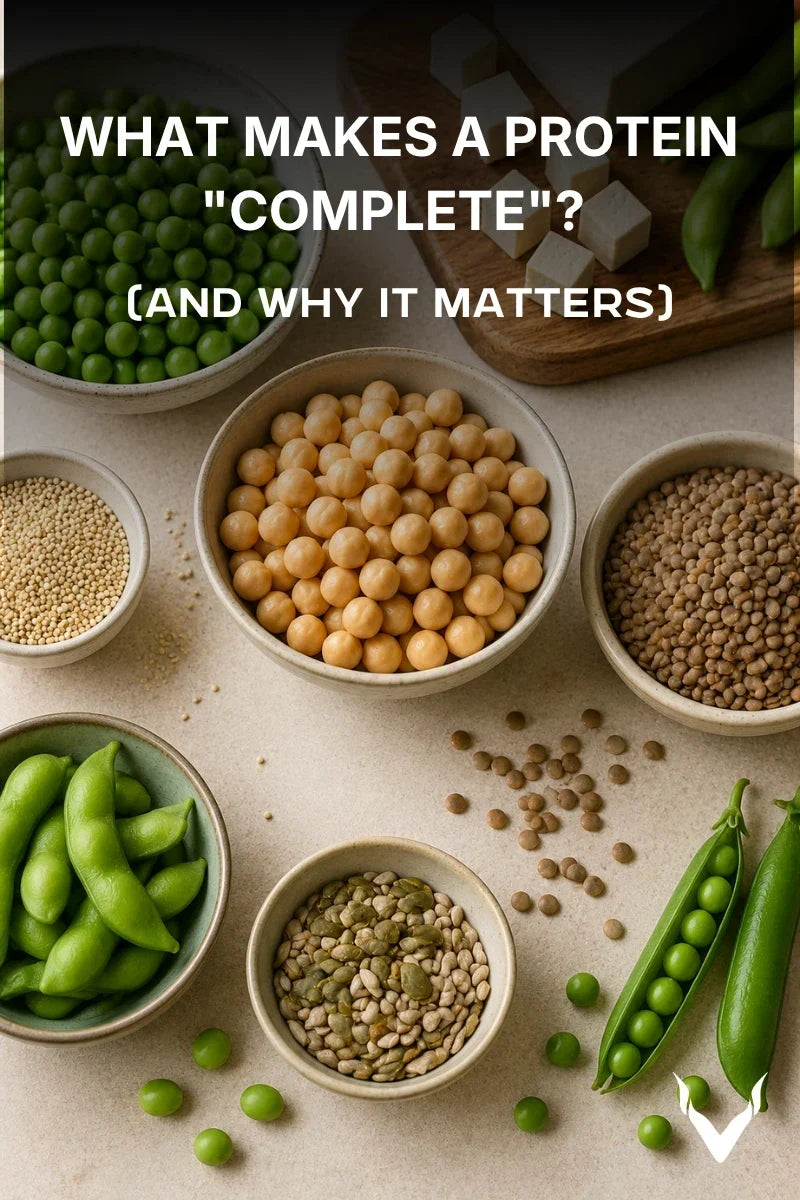
What Makes a Protein "Complete"? (And Why It Matters)
"Complete protein" gets thrown around on labels constantly. Most of the time, nobody explains what it actually means. Here's the short version: SURGE is a complete protein, every essential amino acid, in one serving. Now here's why that's a bigger deal than it sounds.
The Actual Definition
A complete protein has all nine essential amino acids. Those are the ones your body can't make on its own, so food has to supply them. Miss even one, or fall too short on it, and that protein is "incomplete." Doesn't matter how many grams are on the label.
A lot of proteins on shelves don't clear that bar, especially ones that skimp on processing quality or get stretched thin with fillers. Drink one of those, and your body still puts it to work, but only up to a point. It can only use as much as the amino acid running lowest in supply allows, something nutrition science calls the limiting amino acid.
Translation: you can hit your protein number on the label and still come up short on what your body can actually use. SURGE doesn't have that problem. It's complete, full stop.
Why Animal Protein Got the Reputation for Being a Complete Protein
Whey, eggs, meat: naturally complete, all on their own. That's where the idea that "real protein comes from animals" took hold. Plant proteins usually get called out for coming up short on methionine, one of the nine essential aminos your body uses to build protein and make other things, like antioxidants. You'll find it in bigger amounts in foods like sesame seeds, sunflower seeds, and oats.
Peas carry less methionine than those foods, which is exactly why pea protein gets lumped in as "incomplete." Here's the nuance most labels skip: less isn't the same as none. Pea protein still carries all nine essential aminos, methionine included, just in smaller amounts than an animal source. Smaller is still enough to clear the bar.
How SURGE Actually Gets There
Here's the honest answer: nothing extra got added to make SURGE complete. There's no second protein blended in to patch a gap, because there's no gap to patch. SURGE is one ingredient doing the work: hydrolyzed Canadian pea protein, all nine essential aminos, right out of the pea.
The hydrolyzing part, breaking the protein into smaller peptides, isn't what makes it complete.
That's a separate job: it's what lets SURGE dissolve clear instead of cloudy and absorb faster.
Completeness comes straight from the pea protein itself, 25g of it per full serving, 24g of that as BCAAs and EAAs combined.
BCAAs vs. EAAs, and Why Both Numbers Matter
EAAs are the full set of nine. BCAAs, leucine, isoleucine, and valine, are three of those nine that get extra credit for their role in muscle repair. See both numbers on a label? That's your sign the full profile is covered, not just the three aminos gym culture loves talking about.
SURGE has both. Leucine kickstarts muscle protein synthesis, think of it as flipping the "on" switch. But flipping the switch isn't the same as finishing the job. Your body needs the rest of the crew, all nine EAAs, to actually build with. That's why SURGE ships with a complete EAA profile alongside its BCAA content, not just the three that get all the attention.
The Bottom Line
"Complete protein" isn't marketing spin, it's a real amino acid standard. SURGE clears it with one ingredient: hydrolyzed Canadian pea protein, complete on its own, no patchwork required.
A complete amino acid profile, not just protein grams.


Leave a comment
This site is protected by hCaptcha and the hCaptcha Privacy Policy and Terms of Service apply.