
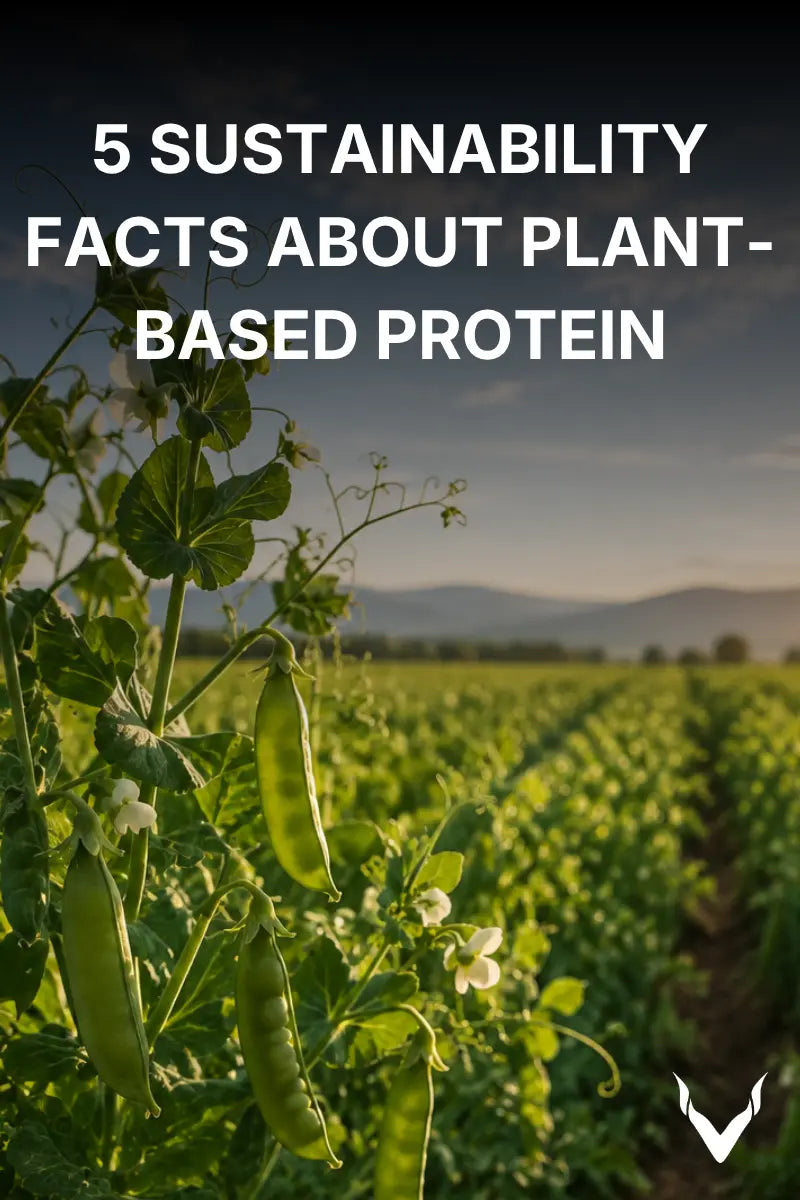
5 Sustainability Facts About Plant-Based Protein
"Plant-based is better for the planet" gets said a lot without much backup. Here's what independent research actually shows about the environmental footprint of plant protein versus dairy-based protein, including the one counterargument worth being upfront about.
1. Growing peas produces meaningfully fewer emissions than producing dairy protein
Research estimates put pea protein's greenhouse gas emissions at a fraction of what's associated with dairy-derived protein, with some comparisons showing multiple-times-lower emissions per unit of protein produced. Dairy production overall is estimated to account for roughly 10-12% of global agricultural greenhouse gas emissions, with methane as a major contributor.
2. It also uses a lot less water and land
Estimates suggest the water and land footprint of dairy-based protein runs several times larger than plant-based alternatives like pea protein. Less land and water per gram of protein is one of the more consistent findings across sustainability research on the two categories.
3. Peas actually improve the soil they're grown in
This one's a nice bonus: peas are nitrogen-fixing legumes, meaning they add nutrients back into the soil instead of depleting it the way many crops do. It's a small ecological win baked into the crop itself, before processing even starts.
4. To be fair: whey is often a byproduct, not the main event
Whey protein usually starts as a byproduct of cheesemaking, not something dairy farms set out to produce on its own. Since the dairy industry exists primarily to produce milk and cheese, some point out that turning leftover whey into protein powder carries a smaller "marginal" footprint, since the emissions from raising the cattle are already counted elsewhere. It's a fair point, and worth acknowledging rather than glossing over, even as a plant-based company. Being upfront about it is part of why the comparison below actually holds up.
5. Why the full picture still favours plant protein
Even accounting for the byproduct argument, the broader dairy supply chain, land for grazing and feed crops, water use, methane from cattle, is a much larger system than what's required to grow and process peas. A byproduct of a resource-intensive industry is still downstream of that industry's full footprint. Judged end to end, plant protein production remains the lighter footprint of the two.
Where VEGAIN Fits In
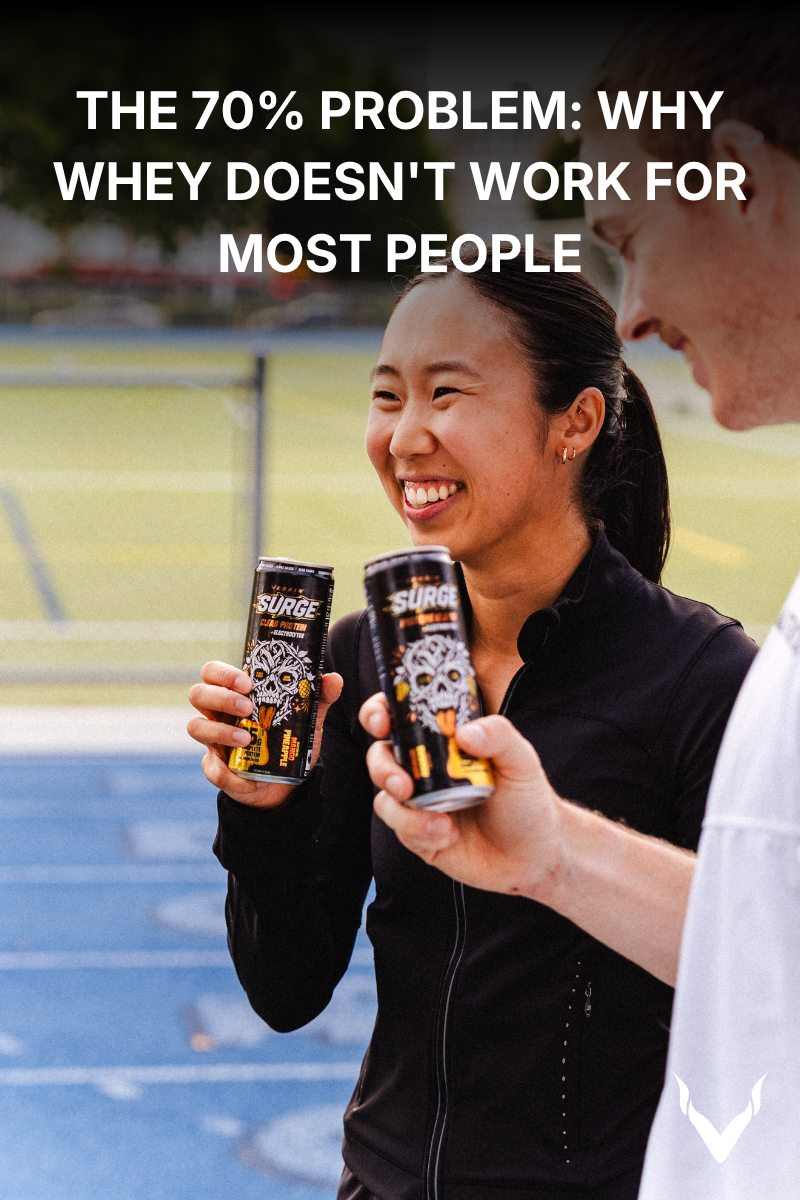
SURGE is made from Canadian-grown pea protein, sourced domestically wherever possible. V-POWER builds on that with a tri-blend of pea, brown rice, and hemp protein for a fuller amino acid profile. It's not a marketing footnote, growing the input close to where it's processed is part of what keeps the footprint down in the first place.
The Bottom Line
If the footprint matters to you, the research backs up choosing plant-based. If it doesn't, that's a personal call, and it doesn't change what's actually in the shaker either way.
Fuel up with Canadian-grown, plant-based protein. Shop SURGE →





Leave a comment
This site is protected by hCaptcha and the hCaptcha Privacy Policy and Terms of Service apply.