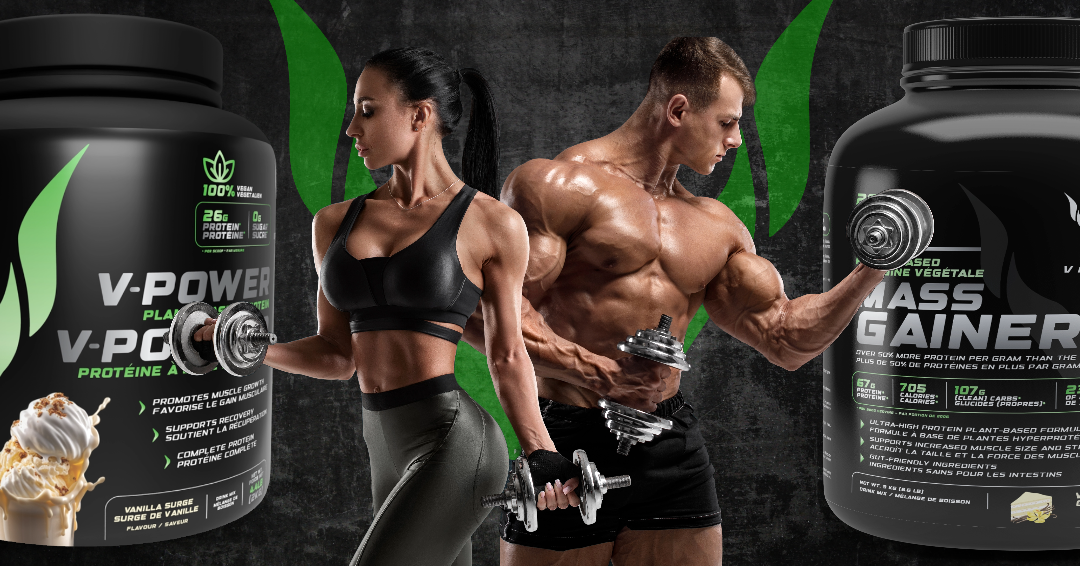
Mass gainer vs. protein powder: the main difference is what each product adds to your day. A standard protein powder is usually designed to provide protein in a relatively compact serving. A mass gainer combines protein with more carbohydrate and calories per serving. Neither is automatically better; the useful choice depends on the gap between what you eat and what your training plan requires.
Mass gainer vs. protein powder at a glance
| What to compare | Protein powder | Mass gainer |
|---|---|---|
| Main purpose | Add protein conveniently | Add protein and more energy in one serving |
| Typical label pattern | More protein relative to calories | More calories, often from carbohydrates, alongside protein |
| Best fit | Your daily protein is short, while your energy intake is already suitable | You want a convenient way to add calories as well as protein |
| What to check | Protein per serving, ingredients, allergens, and total calories | Serving size, calories, protein, carbohydrates, added sugars, and ingredients |
These are general patterns, not fixed rules. Formulas and serving sizes differ, so compare the Nutrition Facts panel rather than relying on the product name or scoop size.
What does protein powder do?
Protein powder is a convenient food supplement that can help you meet a protein target when food alone does not cover it. It does not build muscle by itself, and it is not required if your regular meals already provide enough protein. Protein supports tissue repair and muscle protein synthesis, while resistance training provides the training stimulus.
The International Society of Sports Nutrition position stand reports that 1.4–2.0 grams of protein per kilogram of body weight per day is sufficient for most exercising individuals. That range is general guidance, not a personal prescription; needs vary with health, training, diet, and individual circumstances. Read the ISSN position stand on protein and exercise and the NIH Office of Dietary Supplements overview of exercise supplements.
What does a mass gainer do?
A mass gainer is a higher-calorie powder that usually combines protein with a larger amount of carbohydrate; some formulas also include fat or other ingredients. It can be useful when your plan calls for more energy and preparing another snack or meal is inconvenient. It is simply one way to add calories. It does not guarantee weight gain, direct calories specifically to muscle, or replace a structured eating and training plan.
If you are trying to gain weight, start by looking at your overall intake and progress over time. You may not need a full serving. A smaller portion, a smoothie, or an additional food-based snack may fit better. Choose an approach you can tolerate and sustain, and adjust based on your own trend rather than expecting rapid changes.
How to choose: a simple decision guide
- Your protein intake is low, but you do not need extra calories: a protein powder may be the more direct option.
- You need both protein and more calories: a mass gainer may be a convenient option. Check whether the full serving fits your plan; consider starting with less if appropriate.
- You are unsure what is missing: track a few typical days of meals and training, then review the pattern with a registered dietitian or another qualified health professional.
- You prefer food first: ordinary meals and snacks can provide both protein and energy. Supplements are optional conveniences.
How to compare nutrition labels fairly
- Compare serving sizes. A large scoop can make a product appear to contain more of everything. Check the serving weight in grams.
- Look at calories and protein together. For a protein-focused powder, check how much protein you get for the calories. For a gainer, decide whether the calories and carbohydrates match the amount you intend to add.
- Review carbohydrates, sugars, fat, fibre, and sodium. There is no single ideal profile for everyone. Choose based on your food preferences, digestion, and plan.
- Read the full ingredient and allergen list. Check for ingredients you avoid or do not tolerate.
- Compare cost by useful amount. Cost per serving can be misleading when serving weights differ. You can compare cost per 25 grams of protein or per 100 calories, depending on your goal.
Frequently asked questions
Can protein powder help me gain weight?
It can contribute to weight gain if it adds energy to your overall diet, but the powder itself does not determine the result. A protein-focused product may add fewer calories than a mass gainer, so check its label and your overall intake.
Does a mass gainer build muscle faster?
No product guarantees faster muscle growth. A mass gainer can make it easier to consume more calories, while progressive resistance training, adequate recovery, and a suitable diet remain central.
Is a mass gainer a meal replacement?
Do not assume it is a complete meal. Check the product’s nutrition and ingredient information. A powder may not provide the range of nutrients and variety found in a balanced meal.
Can I use both?
Possibly, but using both is not automatically useful. First identify whether you need additional protein, calories, both, or neither; then choose servings that fit your overall eating plan.
The takeaway
Choose protein powder when the main gap is protein. Consider a mass gainer when you also want a convenient source of additional calories. Compare labels by serving weight, calories, protein, carbohydrates, ingredients, and cost. Your training plan and overall food intake matter more than the category printed on the tub.
For a product-specific example, see the VEGAIN Plant-Based Mass Gainer ingredients and nutrition information and evaluate it against your own needs.
This article is for general information and is not medical advice. If you have a medical condition, dietary restrictions, or questions about weight change, consult a qualified health professional.



Laisser un commentaire
Ce site est protégé par hCaptcha, et la Politique de confidentialité et les Conditions de service de hCaptcha s’appliquent.