
What Are Peptides, Really? A No-BS Breakdown
Peptides are having a moment. Scroll through any wellness content lately and you'll see influencers talking about them like they're the next big biohack: vials, injections, clinics, the works. Before you get swept up in it, here's the no-BS breakdown, including one thing you might not expect: you may already be drinking peptides, safely, in your protein shaker.
1. Peptides aren't one specific product — they're a category
A peptide is simply a short chain of amino acids linked together. That's it. Some peptides act as signalling molecules in the body, others are just fragments created when a larger protein gets broken down. "Peptide" describes a structure, not a single ingredient or effect, which is exactly where a lot of the current hype gets muddy.
2. The trending kind is a genuine gamble
Most of what's blowing up online right now refers to injectable research peptides like BPC-157 and TB-500, marketed for recovery, longevity, and performance. Here's the problem: most of these haven't been well studied for safety or efficacy in humans, and health experts have openly called the space a "Wild West" of unregulated products. If that's the kind of peptide you've seen mentioned, treat it with real caution and talk to a healthcare provider before going near it, this isn't something to take on an influencer's word.
3. There's a completely different kind — and it's been in food science for decades
Long before peptides were a wellness trend, food scientists were studying them for a much less flashy reason: digestion. When protein is hydrolyzed, broken down into smaller peptide chains before you ever consume it, your body absorbs it through a different, faster pathway than it uses for whole, intact protein. This isn't fringe science; it's well-established nutrition research on protein hydrolysates and absorption.
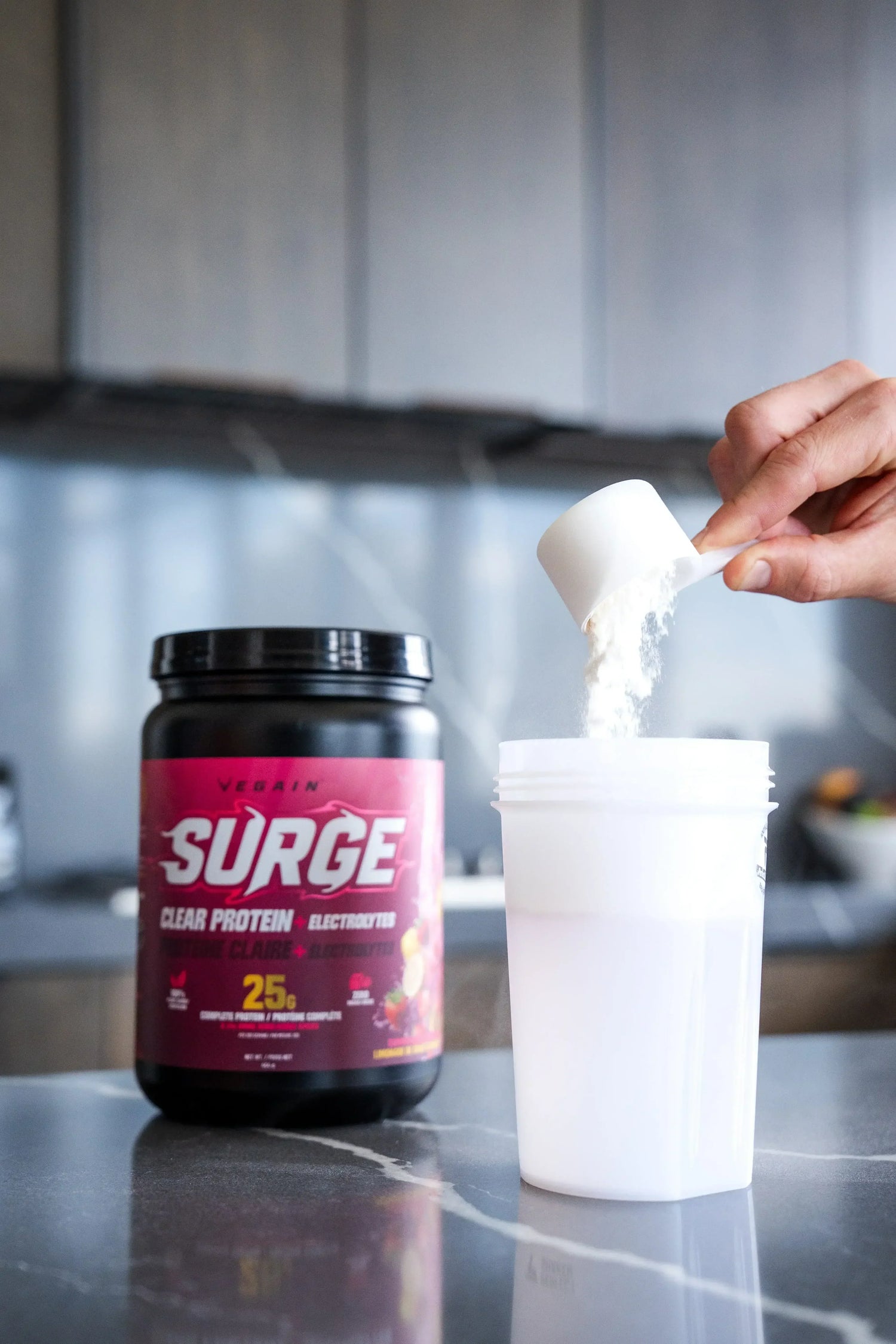
4. This is exactly how SURGE is made
SURGE™ starts with Canadian-grown pea protein that's hydrolyzed into smaller peptides. That's the actual reason it dissolves crystal-clear instead of milky, absorbs quickly, and goes down light instead of sitting heavy. You still get all 9 essential amino acids and 24g of BCAAs and EAAs per 30g serving, at 84% protein density, the peptide structure changes how it's absorbed, not how much real protein you're getting.
To be clear: this is a food-derived peptide from hydrolyzed protein, not a signalling or therapeutic peptide like the injectable kind in #2. Different category, different purpose — SURGE isn't claiming to do what those products claim to do. It's just a well-made, fast-absorbing, easy-to-drink protein.
5. You don't need to gamble to get the upside people are chasing
A lot of what people are chasing with the current peptide trend (easier recovery, less digestive strain, better absorption) is something food-based peptides have quietly delivered for a long time, with a much better-understood safety profile. You don't need an unregulated vial for that. You need a protein that's actually built to be absorbed well, which is the entire premise behind SURGE.

The Bottom Line
"Peptides" is a big, broad word getting used for two very different things right now: one genuinely risky, one that's been backed by food science for years and is sitting in your protein shaker. Know which one you're getting.
CTA: Try the peptide-powered protein that's actually built for easy digestion.



Laisser un commentaire
Ce site est protégé par hCaptcha, et la Politique de confidentialité et les Conditions de service de hCaptcha s’appliquent.